

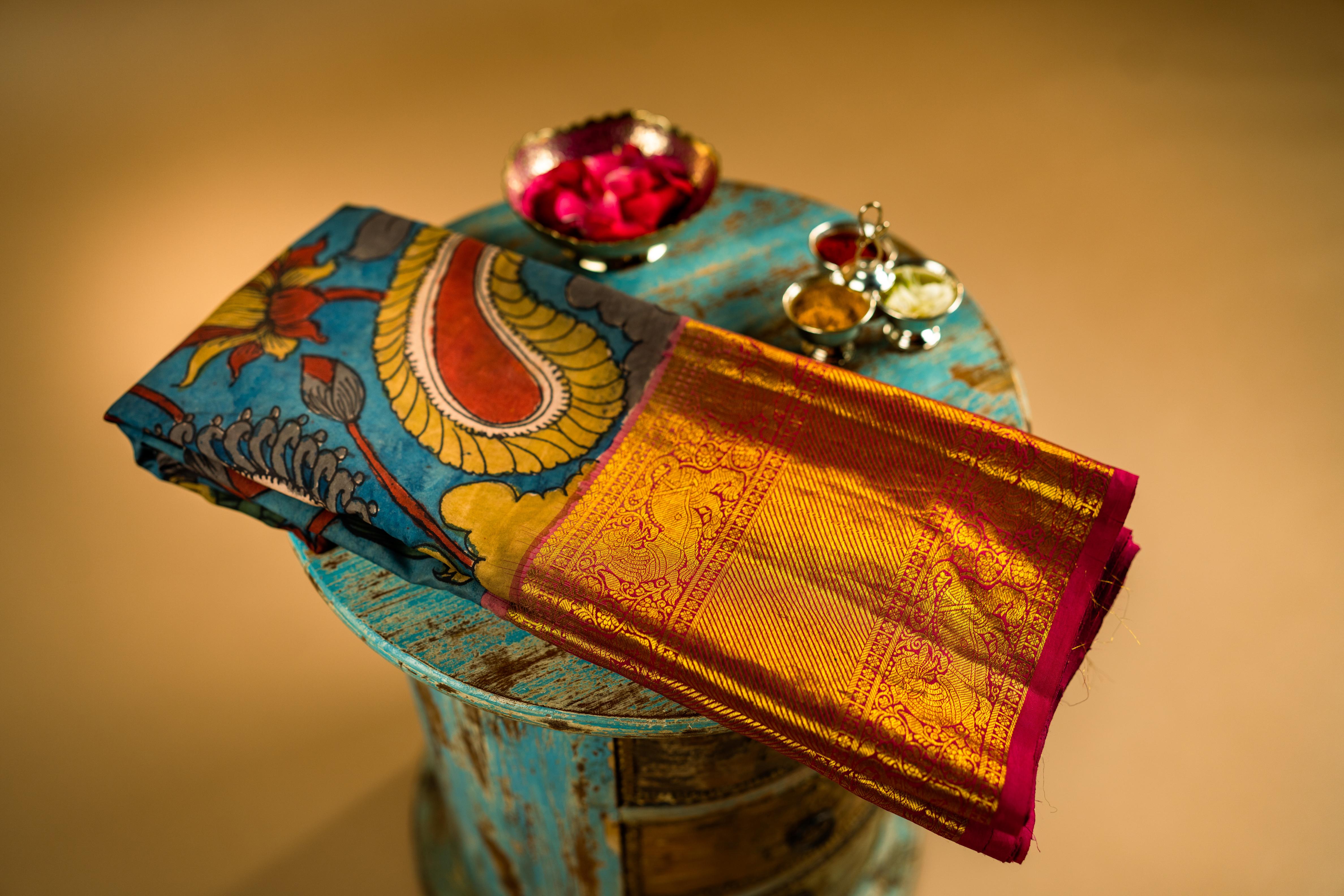
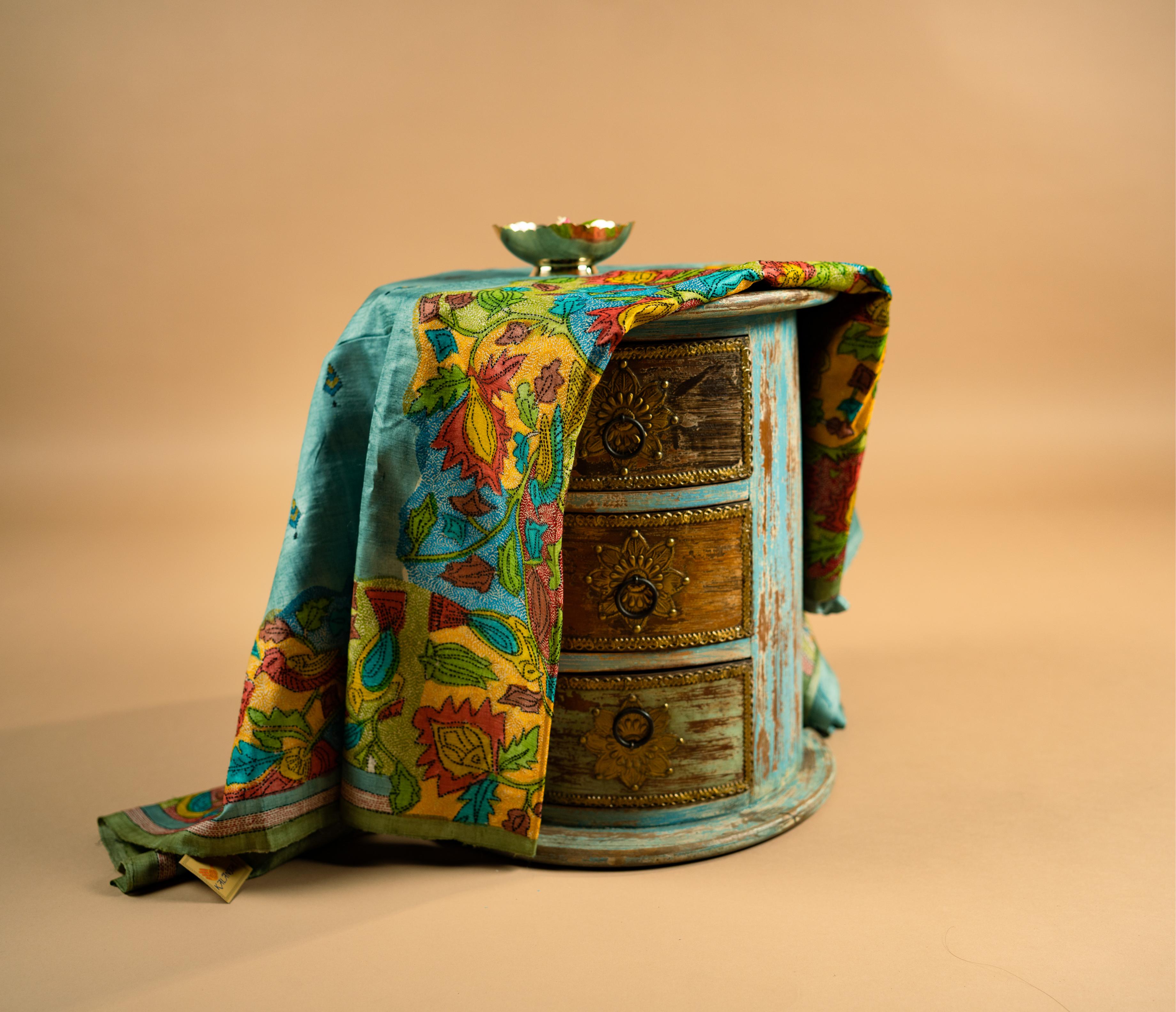
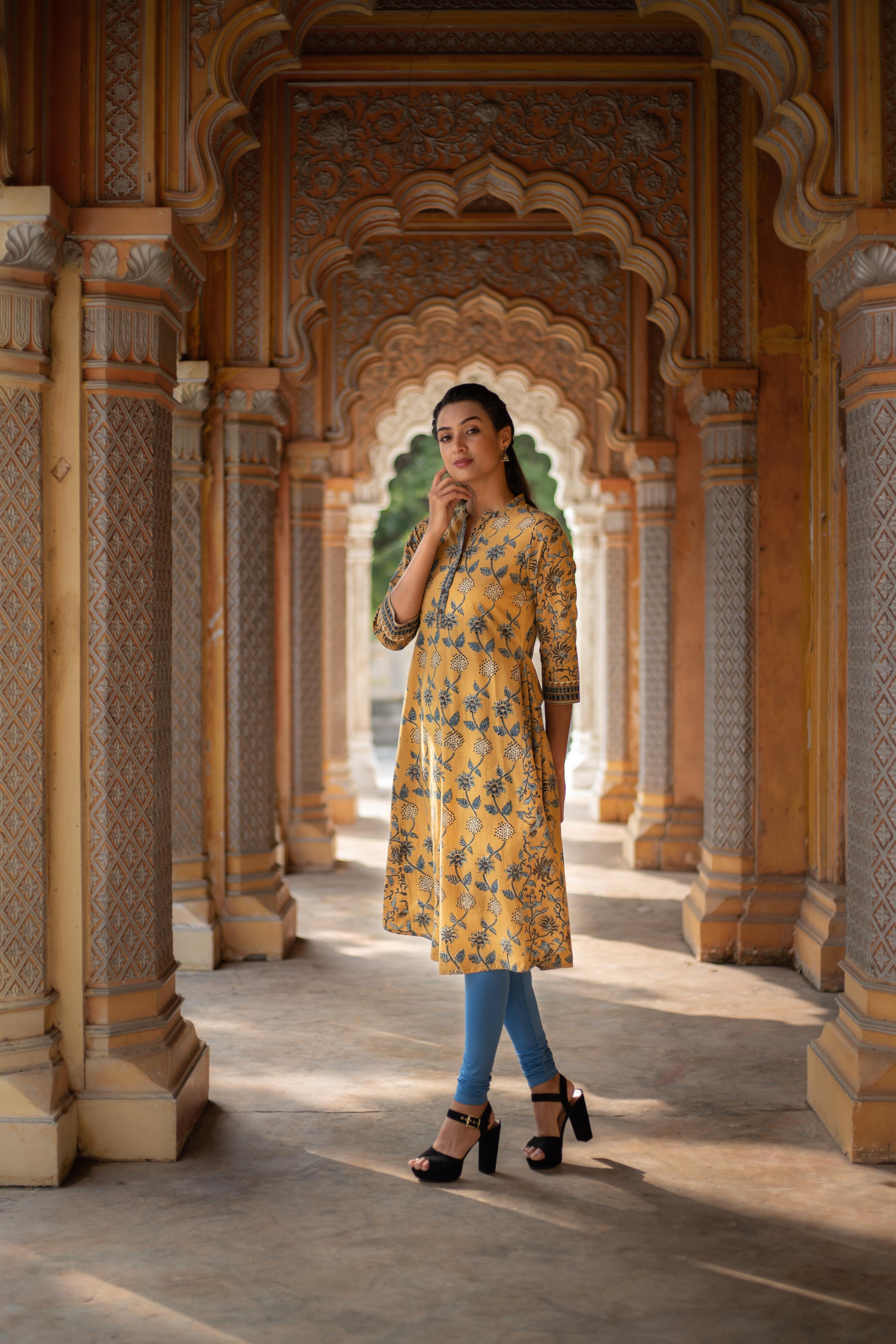

There is a village in Telangana where geometry is spun into silk, and mathematics becomes a motif. Where a weaver binds yarn before a drop of dye ever touches it — trusting a mental map, a generational memory, and hands steadier than a surgeon's — to produce cloth so precisely patterned that scholars once called it an impossible textile. This village is Pochampally, and the cloth it creates is Pochampally Ikat.
At Kalanjali, we have been custodians of this living art for decades. As pioneers in sourcing, curating, and championing authentic Pochampally Ikat, we believe every saree, every dupatta, every kurta fabric on our shelves carries within it the story of a weaver's extraordinary skill. This blog is our invitation to you — to understand, appreciate, and wear that story.
The Village That Weaves Mathematics
Pochampally — officially Bhoodan Pochampally — sits about 45 km east of Hyderabad in the Nalgonda district of Telangana. For centuries, this small town has been the epicentre of India's finest resist-dyeing tradition. So significant is its cultural footprint that Pochampally has been recognised as one of the World Craft Cities by the World Crafts Council, and its Ikat weave holds a coveted Geographical Indication (GI) tag, protecting its authenticity and artisanal origin.
The word Ikat derives from the Malay-Indonesian term mengikat, meaning "to tie" or "to bind." But what makes Pochampally Ikat extraordinary — and distinct from single-ikat traditions found elsewhere in India — is its mastery of the double-ikat technique, where both the warp (lengthwise) and weft (crosswise) threads are resist-dyed and precisely aligned before weaving begins. Only two textile traditions in the entire world practise true double ikat at a commercial scale: Pochampally in India and Patan Patola in Gujarat. That alone tells you how rare this fabric is.
The Double-Ikat Technique — Step by Step
Understanding how a Pochampally Ikat saree is made transforms the act of wearing one. This is not a printed fabric. This is not embroidered cloth. The pattern is woven into existence, not applied onto it. Here is the process our master weavers follow:
1. Thread Preparation
Pure silk or fine cotton yarn is measured, wound into bundles (called hanks), and stretched across a frame. The weaver mentally maps the final design onto the raw thread — a skill that takes years to master.
2. Resist Binding (Tying)
Sections of the yarn are tightly bound with cotton threads or plastic ribbons at precise intervals corresponding to the intended pattern. These bound sections will resist dye penetration, creating the design. Both warp and weft threads are tied independently.
3. Dyeing
The bound hanks are immersed in natural or chemical dye baths. Multiple colours require multiple rounds of tying, dyeing, and untying — a process that can take weeks for complex multi-colour designs. The resist areas remain the original colour.
4. Untying & Alignment
Once dried, the bindings are removed, revealing yarn segments in different colours. This is where extraordinary skill is needed: the warp and weft threads must be aligned with millimetre precision on the loom so their pre-dyed patterns lock together perfectly during weaving.
5. Weaving on the Pit Loom
The weaver works on a traditional pit loom, seated at a pit dug into the ground for the foot pedals. As the shuttle passes through, the warp and weft colours unite to form the design. Any misalignment — even by a single thread — distorts the pattern irreversibly.
5. Finishing
The completed fabric is carefully washed, starched if required, and checked for pattern integrity. A single six-yard Pochampally Ikat saree in double ikat can take a skilled weaver two to three weeks to complete.
Kalanjali: Pioneer of an Enduring Craft
Long before Pochampally Ikat became a global conversation in sustainable fashion, Kalanjali was already there — on the looms, in the homes of master weavers, and at the forefront of every effort to protect and present this extraordinary textile to the world.
Kalanjali's association with Pochampally begins with a founding principle: that authentic Indian handloom deserves the same reverence as fine art. We do not treat Pochampally Ikat as a trend. We treat it as a living heritage — one that must be sourced responsibly, compensated fairly, and presented honestly.
Our curated collections are sourced directly from weaver cooperatives and master artisans in Pochampally and the surrounding cluster villages of Koyyalagudem, Siripuram, and Choutuppal. Every piece in our Pochampally range is verified for technique — you will never find machine-printed imitations on Kalanjali's shelves bearing the Ikat name.
Over the years, Kalanjali has also been actively involved in design collaborations with weavers, helping them adapt traditional motifs to contemporary silhouettes and colour palettes — ensuring that the craft remains economically viable and creatively alive for the next generation of artisans.
Shop the Collection: https://kalanjali.com/collections/ikat-weaves
Related posts

- August 19, 2026
Most sarees are woven first and decorated later. A Pochampally Ikat saree reverses that order entirely — the pattern is...

- June 06, 2026
Characterized by its rich fabrics, vivid hues and immaculate zari work, South Indian Sarees radiate in timeless craftsmanship passed through...

- May 20, 2026
Delve into the couture of Chanderi - a collection of Cotton Chanderi Sarees, Silk Chanderi Sarees. Woven with meticulous and...